Analysis of Key Factors Affecting the Service Life of Crusher Parts
Release time:
2025-04-15 08:38
As a professional crusher parts foundry we frequently receive inquiries from clients (including crusher equipment users and new traders): How long is the service life of your crusher parts? Which material is more suitable for our working conditions? What are the differences between Mn18 and Mn13 in practical applications?
As an experienced manganese steel foundry, today we will delve into several core factors that affect the service life of crusher parts. This article mainly focuses on cast wear parts (such as jaw plates, cone liners, mill liners, etc., manganese steel and chromium steel castings).

I. Selection Criteria for Crusher Part Materials
Except for special parts (such as high-chromium cast iron used for hammer plates), high-quality crusher parts foundry Manganese steel is usually selected as the main material. Common manganese steel grades include Mn13, Mn18, and Mn22. The characteristic of manganese steel is that its surface hardens rapidly when subjected to strong impact, while maintaining good toughness of the base material. The higher the surface hardening degree (hardness can reach over HB550 after complete hardening), the better the wear resistance. However, insufficiently hardened surfaces (hardness below HB350) will affect the service life of crusher parts.
Material selection should be based on specific working conditions:
1. Recycled manganese steel can meet the production needs of ordinary Mn13
2. If higher performance is required (such as Mn18 and above), electrolytic manganese raw materials must be used
This is particularly important for professional manganese steel foundries.
II. Key Control Points of Heat Treatment Process
As crusher parts foundry a core process, heat treatment directly affects product quality:
1. The surface of the casting must be thoroughly cleaned before entering the furnace
2. Strictly control the time interval from casting to quenching
3. Effectively control the carbon content on the surface of the casting
4. The quenching pool temperature must meet European standards (below 20℃)
5. Precisely control the initial temperature of the casting when entering the furnace
III. Precision Machining and Surface Treatment
In a professional crusher parts foundry After heat treatment, the castings need to undergo:
1. Precision machining to ensure dimensional accuracy
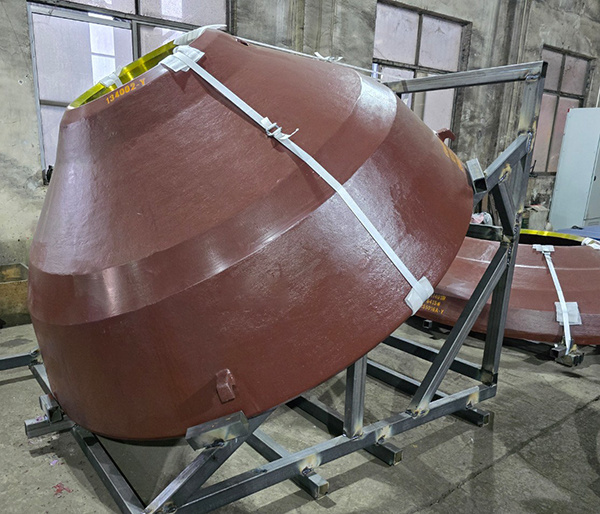
2. Professional rust prevention treatment (spray painting is not only aesthetically pleasing but also effectively prevents oxidation)
Through strict control of the above processes, high-quality manganese steel foundries can produce crusher parts with long service life and stable performance. We suggest that customers, when selecting, should not only focus on the material grade but also examine the overall process level of the foundry.
Crusher parts foundry,Crusher part material,Manganese Steel Foundry,Factors Affecting Crusher Parts Life,Casting wear parts
RELATED INFORMATION

2025-04-11
60
2025-06-02
60

The main products of Duma Machinery include: rolling mortar wall, crushing wall and material dividing plate of cone crusher; jaw plate, side guard plate and pressing strip of jaw crusher; lining plate of ball mill, autogenous mill and other equipment; plate hammer and impact plate of impact crusher; hammer head, screen strip, lining block and other wear-resistant alloy steel parts of metal crusher.
Contact Information
Jiangxi Duma Machinery Manufacturing Co., Ltd.
Address: No.15, Jinhui Road, High-tech Zone, Yushan County, Jiangxi Province
Mobile:13957606188
Telephone:0793-2238555
Mailbox:ceo@dumajx.cn
Chinese website:Duma. Website Wear parts. Website

sweep
All rights reserved©2023 jiangxi duma machinery manufacturing co., ltd